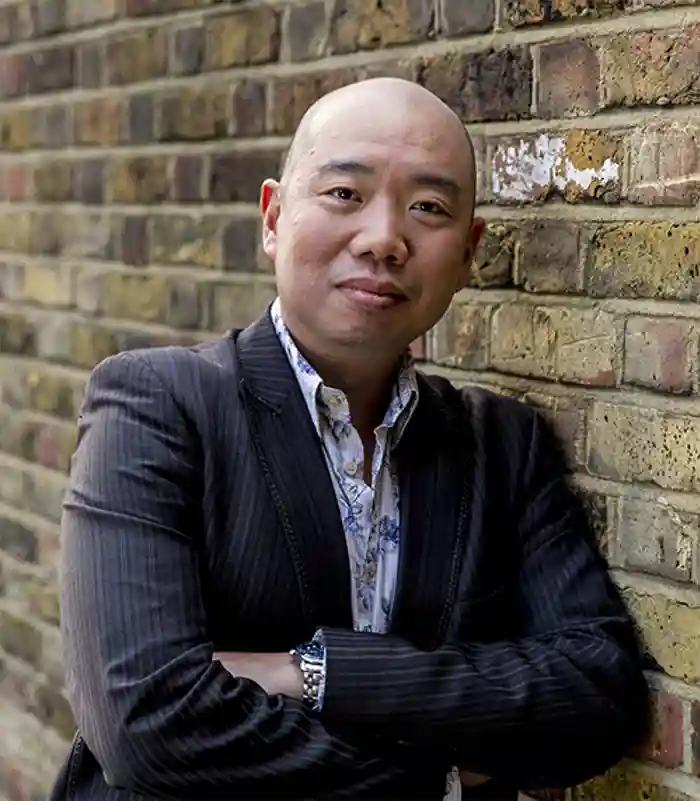
Giles Yeo MBE is Professor of Molecular Neuroendocrinology and programme leader at the MRC Metabolic Diseases Unit in Cambridge. He is the Honorary President of the British Dietetic Association, President of the British Society for Neuroendocrinology and a high-profile and prolific science communicator. He was awarded the Society for Endocrinology Medal in 2022. Editor of The Endocrinologist, Kate Lines, caught up with Giles to discuss his career and work in the genetics of body weight and obesity.
What led you to the field of obesity?
My PhD, at Cambridge, was on the molecular genetics of Japanese pufferfish, which wasn’t going to pay the rent. I had a post-doc position waiting for me back in California, where I’m from, but I’d met a girl (now my wife), so I decided to stay in the UK.
I went knocking on doors looking for a position, and the second door I knocked on belonged to Steve O’Rahilly. This was in 1998, six months after publication of the first paper to provide genetic evidence that leptin was a regulator of energy balance in humans. Steve and Sadaf Farooqi (then a PhD student) had begun to collect a cohort of severely obese children and they needed a geneticist. They hired me on the spot.
On my first day, Steve said ‘Here’s the melanocortin 4 receptor gene. Go screen it.’ We found the first cause of obesity linked to that gene. It was my first paper of my post-doc and a big success. I’ve been in the field ever since.
What are you working on right now?
Now we know that the genetics of body weight are the genetics of how our brain controls feeding behaviour.. So, I’ve become an accidental neuroscientist, looking at how the brain regulates food intake, as well as a glorified cartographer, making maps of the feeding circuits within the human brain.
At the beginning of 2025, we produced a spatial cellular map of the human hypothalamus from the donated brain of a normal-weight individual, and we’re currently putting together the same thing for the hindbrain. These will be the benchmark against which we can map differences in donated brains from individuals across the body weight spectrum. We have brains donated from people who were extremely obese and people who were severely underweight, so we’re going to map the feeding circuits in these.
Using these maps and other tools, including neurones derived from induced pluripotent stem cells, we want to continue to functionally characterise human genes that are potentially linked to obesity. We’re also looking at how the new generation of incretin-based weight-loss therapies are working, or could work, mechanistically.
What is the biggest current challenge in your field?
Genetics can now be done well at scale, but we need to be able to match behaviour and observable characteristics with this insight, and the difficulty is in phenotyping. For instance, measuring what people eat accurately, at scale. This will help us understand things like variation in response to weight-loss therapies or why obesity comes with ill health in some and not others. I’m hoping there will be engineering solutions to these challenges.
And the most exciting development?
Never have we had more successful tools to treat a lot of people with obesity. The new weight-loss therapies have been a complete game changer and, since they hit, my world has gone bananas. No-one in the field would’ve predicted the broad effectiveness and safety of these drugs, and it has generated so much interest in what we do.
But we mustn’t blow the opportunity. We need to minimise risks and find other approaches to target the brain to reduce food intake.
What do you enjoy most about your work?
Of course, I love the science, but the aspect that thrills me the most is speaking about the field. From public outreach to teaching students and speaking at conferences.
What is your advice for people starting in research?
When I dropped my son off at uni a few years ago, I gave him a piece of advice that I’ve lived by through my career, ‘Be more of a pain to replace than to keep. Find a niche, fill it and be useful to people. Make yourself invaluable.’