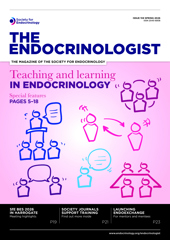
This issue of The Endocrinologist is particularly close to my heart as, this year, I have started lecturing properly for the first time. If you want to do them effectively, teaching and learning in endocrinology are far more complex than I first thought. And both are made even more important by the realisation that this is how we inspire the next generation to continue our work. The articles in this issue discuss how we can achieve this across the specialties, including research, clinical practice and medicine.
One of the running themes is the importance of appropriate communication. Dominic D-C Lai and Jonathan Wolf Mueller describe a need for ‘decluttering endocrine teaching’ and highlight how the traditional reliance on ‘alphabet soup’ jargon and cryptic abbreviations often alienates students. They suggest that, by focusing on the inherent logic of these systems rather than lists of facts, we can help ensure that endocrine teaching remains both effective and inspiring for the next generation.
A different type of communication is highlighted by Anjali Amin, who discusses the importance of language in patient engagement and how this is a core clinical tool that should be adapted to each patient’s individual needs. Incorrect language can affect compliance and health outcomes, whereas communication centred around partnership, motivation and mutual goals is more likely to result in patient engagement and sustained behavioural changes.
The Society has just held the SfE BES conference 2026 in Harrogate, during which we celebrated the achievements of many people, including Ketan Dhatariya, the recipient of the 2026 Outstanding Teacher Award. Our interview with Professor Dhatariya reveals his advice that ‘everyone has potential’. This seems a fitting statement for us all to remember when we are teaching and learning, throughout our careers in endocrinology.
With best wishes
KATE LINES