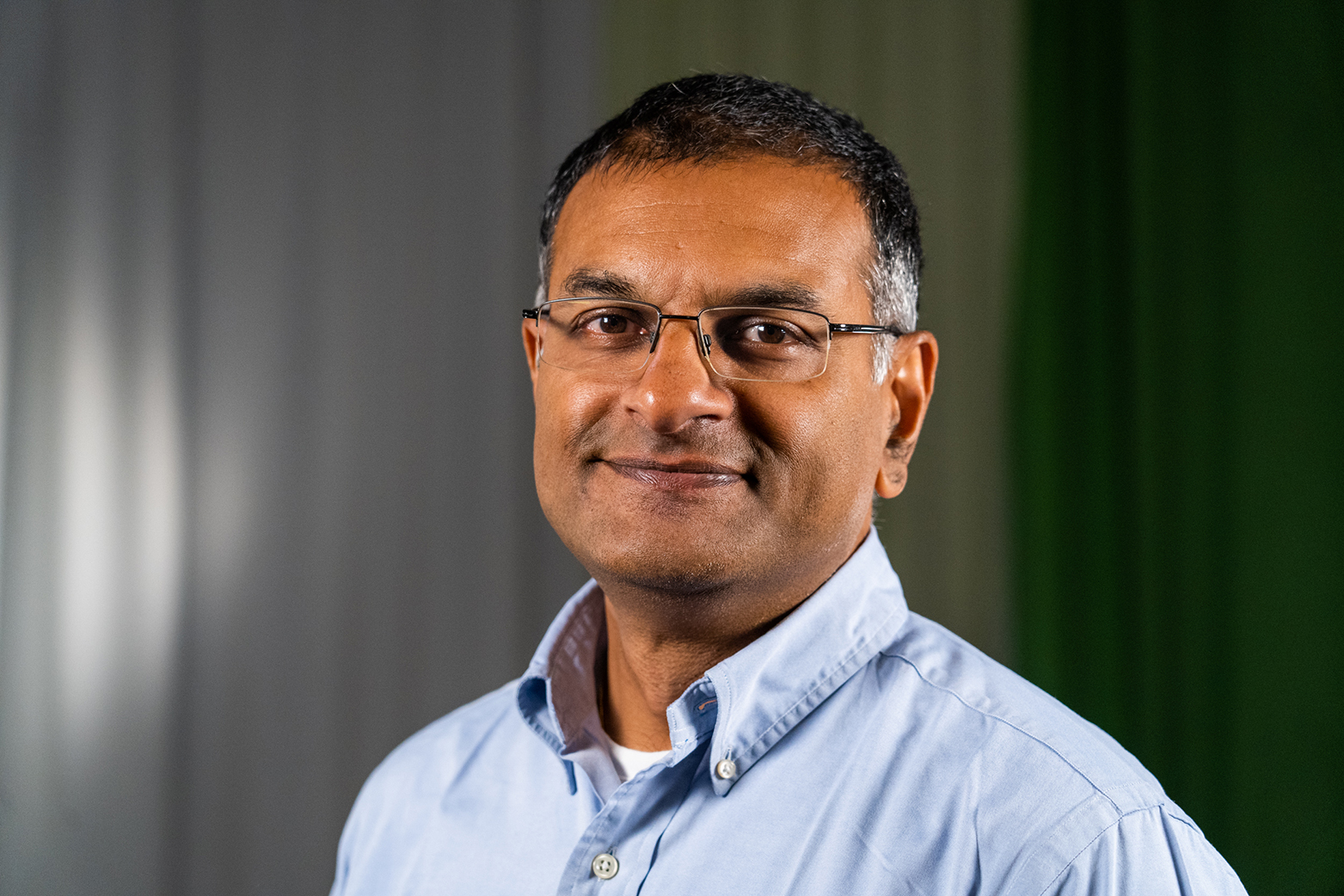
Professor Ketan Dhatariya is a Consultant in Diabetes and Endocrinology at Norfolk and Norwich University Hospitals NHS Foundation Trust, Honorary Professor of Medicine at the University of East Anglia and Chair of the Association for British Clinical Diabetologists (ABCD). He recently received the Society for Endocrinology 2026 Outstanding Teacher Award. The Endocrinologist’s Associate Editor, Bhavna Sharma, asked him about his career and the advice he would offer current and future enthusiasts in endocrinology and diabetes.
What led you to the field of diabetes and endocrinology?
I began my medical career on the Isle of Wight, where Dr Arun Baksi guided me towards a job in diabetes, as a long-term career. Later, during my training, Professor Margot Umpleby (a non-clinical scientist at St Thomas’) suggested I emailed Dr K Sreekumaran Nair at the Mayo Clinic in Rochester, MN, USA, for advice, when she was helping me plan a grant application. To my astonishment, the very next day he phoned saying, ‘I have a job for you’!
I am eternally grateful to him and the Mayo Clinic for taking a chance on me as a complete unknown. Sree changed my life, and I would never be doing what I do now if I hadn’t been at the Mayo Clinic. I got my Certificate of Completion of Training on 1 September 2001 and went to the USA on 8 September – just three days before the whole world changed.
What are the biggest differences in our field between the UK and the USA?
I have to say that I don’t like the way the system is set up in the USA, and the disparity between those who have and those who have not, based on money.
Training in the USA is very different. You are exposed to different things and can choose your specialty quite quickly, and your experience is determined by where you are and who you are with. This is similar to the UK, but in the UK training involves some specialist experience and time in a teaching hospital.
'I always ask the residents, ‘How many of you read journals?’ and, other than for the BMJ ... almost nobody puts their hand up. If you don’t know what’s going on in our specialty, how can you be a leader?'
It’s the opportunities that are different between the USA and the UK. If you get to a big centre, you will often have the opportunity to do some research if you want to. But research funding is easier to obtain in the USA, and the UK does not have enough centres where trainees can do the work they want to do.
As Chair of the ABCD, I have always recognised the lack of research opportunities for UK trainees who find themselves in District General Hospitals (DGHs) rather than big centres. This is why the ABCD set up Dragons’ Den funding, to give trainees in DGHs more research opportunities. If they have a good idea and want some funds, there’s no reason why they shouldn’t apply and get a small pot of money.
Despite this, I do like the UK training; it is much more structured. You experience a number of clinics and multidisciplinary teams, and are trained in diabetes and endocrinology, so that later you can choose to apply for jobs in either or even both areas.
How could a young UK registrar become a voice in diabetes or develop a leadership role?
The important thing to understand is that being a voice and doing research are two different things. You certainly do not have to be a researcher to be a leader. I’d encourage residents to get away from the idea that research is everything, because it’s not. I didn’t publish my first paper until I was a fourth-year registrar.
To be a leader, you must put your head above the parapet, and you have to want to make a difference. Look out for every opportunity to start making a voice for yourself. This might be at a regional level, e.g. as the person who leads regional training, or you could be a member of the Young Diabetologists and Endocrinologists’ Forum, a Society for Endocrinology committee, the ABCD, a Royal College, etc.
One thing I would always emphasise is not to expect things to land in your lap. Put yourself forward for committees and other opportunities. Don’t worry if it doesn’t work first time, apply again next time.
How can a trainee develop their skills?
You need to read. I always ask the residents, ‘How many of you read journals?’ and, other than for the BMJ (which comes to the front door), almost nobody puts their hand up. If you don’t know what’s going on in our specialty, how can you be a leader?
Google the top 15 journals in diabetes and endocrinology, and then subscribe to the e-tables of contents. Of course, don’t forget the big general medical journals as well, such as the New England Journal of Medicine and JAMA. Journals where all the ‘big stuff’ is published are places to start.
What would you say to trainees (or even consultants) with imposter syndrome?
Welcome to the club! Every day I think of myself as a small boy in short trousers being allowed to play at the top table. But you have to accept that maybe you are being invited to take part in activities because people want to listen to what you have to say. Be brave!
What impact is artificial intelligence (AI) having on you as an educator?
'One thing I would always emphasise is not to expect things to land in your lap. Put yourself forward for committees and other opportunities. Don’t worry if it doesn’t work first time, apply again next time.'
I haven’t had to change my role because of AI yet. That’s because, in my opinion, I do not believe that AI is currently at the level of maturity to be sure that everything that it tells you is correct. On the other hand, one of my colleagues recently told me about an AI app to make the latest research papers into a short podcast. They listen to the podcast when they’re walking into work – and that’s brilliant. Every generation needs to adapt, but I do still like reading papers!
Will more online appointments and automated technologies mean we lose touch with our patients?
Not in the near future in my opinion because, whatever technology can do, there is no substitute for laying your hand on a patient. There is no substitute for seeing somebody who’s got a visual field defect in a clinic, there is no substitute for examining a diabetic foot. I still think there’s going to be a role for individual touch and that element of empathy.
What is your advice for someone early in their training?
Never take no for an answer! When I was a registrar on the Isle of Wight, I applied for over 125 jobs and was never shortlisted. There was one individual at that time who just said to me, ‘We’re actually looking for high flyers,’ and put the phone down. Every day I think about that individual, because they drive me, they lit a fire underneath me. I learnt two things from that phone call: first, I’ll never speak to people that way, and, secondly, to never underestimate people, because people can flourish. Everybody has potential.