Teaching endocrinology across medical and life-science programmes is challenging, as a lot of the content is information-rich and perceived as difficult by students. Technical jargon and non-helpful abbreviations are part of the problem. Here, we invite you to revisit concepts, and maybe replace some of these with more helpful terms, metaphors and analogies, in line with cognitive load theory,1 to make space for the content that matters.
AXES AND AVALANCHES
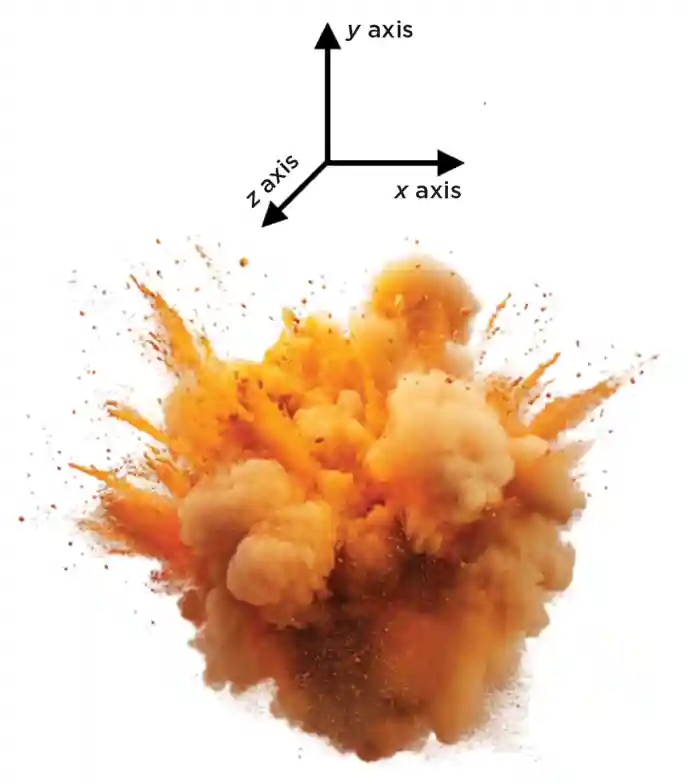
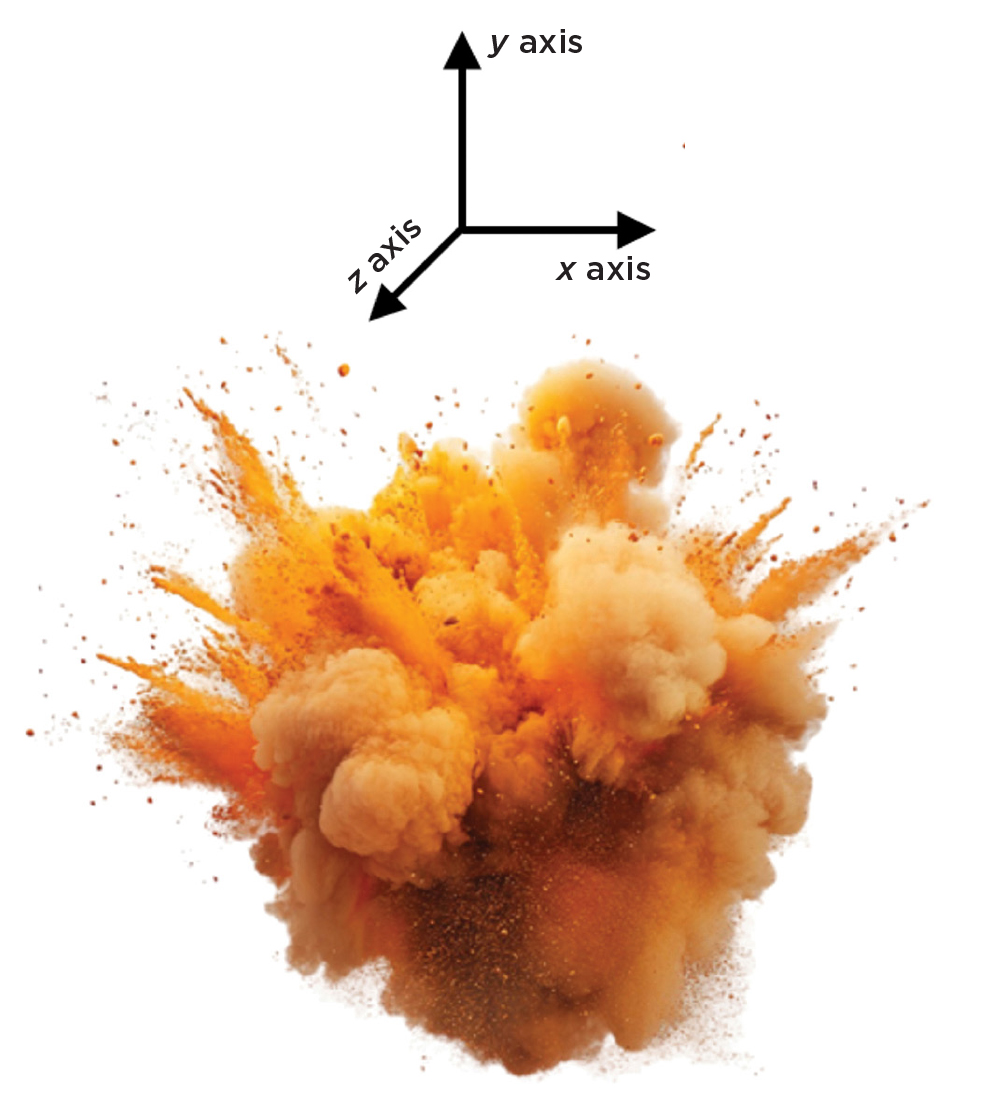
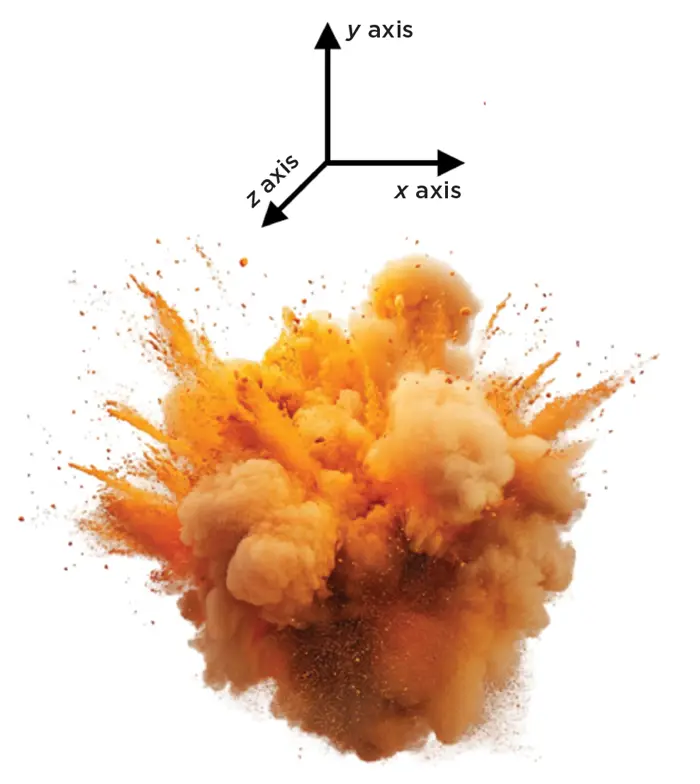
Teaching about the many axes of endocrinology can be confusing, due to the many meanings of the word ‘axis’. Importantly, this ‘axial focus’ often misses the point of the enormous, near-explosive signal amplification inherent to hypothalamic-pituitary-adrenal signalling and similar systems. ©tohamina at www.freepik.com
Quite some effort goes into teaching students about hierarchies of hormones. Some releasing hormones will kick off the production of some targeting or tropic hormones, for final glands then to secrete vast amounts of endogenous hormones. For no apparent reason, we call these relay systems ‘axes’.
Less often taught, but maybe more useful to remember, is the gigantic signal amplification that such hierarchical hormonal systems can achieve. For cortisol secretion, it all starts with a thought – let’s assume this is one ‘thing’, one particle dissolved in 5l of serum, resulting in a tiny concentration of 0.35×10⁻²⁴mol/l.2 Let’s compare that then to an average morning blood cortisol, taken at 08.00–10.00, which is 0.35μmol/l or higher.
Conveniently for our comparison, the two ‘0.35’ values cancel each other out. So, this comparison is all about setting two concentrations into perspective: the one above, 10–24mol/l (for fans: this is a yoctomole) and a cortisol concentration of 10–6mol/l. It is noteworthy that the final concentration of cortisol would be 1018-fold higher than the initial value (that’s an amplification of a million × a million × a million).
Such a system might be better described as an avalanche, a water cascade, or something similar to a photon-multiplier tube, all of which are more helpful concepts than speaking of axes. Once this connection is made clear, the need for efficient negative feedback might be better understood.
EATING ALPHABET SOUP
The problem with the alphabet soup of endocrinology is that it highlights cryptic abbreviations, at times without any framing, severely hampering engagement and understanding. Think of a multiple-choice question that gives you T1, T2, T3 and T4 as alternatives. The first two might be linked to β cells in the pancreas, while T3 and T4 could refer to thyroid hormones. The issue goes on, with G cells, K cells and I cells.
It is, however, best encapsulated by the ‘F word’. Imagine, being taught this equation: E ⇌ F
Imagine also that this is the one and only thing you are presented with around pre-receptor regulation of the stress hormone cortisol. Nothing else. No mentioning that E stands for ‘compound E’, and should be avoided as it is regarded as too close to ‘vitamin E’. It is taken for granted that you know that F represents ‘compound F’ and is also known as cortisol. And no historical framing to mention that all of this happened to Edward Kendall, an early hero of endocrine research history.
In this specific case, we would recommend considering using the words ‘cortisone’ and ‘cortisol’ throughout, making clear that one is a ketone and the other an alcohol. Maybe even enrich this further with chemical formulae, indicating that the two are, indeed, a redox couple. As long as you don’t plan to provide a lecture on the history of endocrinology featuring Dr Kendall, it may be best not to mention E and the ‘F-word’ at all.
GETTING TO GRIPS WITH APPLIED ENDOCRINOLOGY
Why not teach applied or clinical endocrinology earlier on, maybe by inviting clinical pharmacologists into dedicated teaching sessions? The interaction between the anticoagulant warfarin and albumin is one of the links that might be taught better. Warfarin binds tightly to albumin, but it is active only as a free drug. Hence, any changes in blood albumin content may have implications for the effective dosing of warfarin.3
At the same time, it is clinical routine in a global setting that brings local colloquialisms with it, and associated difficulties in understanding. These include transatlantically divergent names for the catecholamines (epinephrine in North America and adrenaline in Europe), the pronunciation of the word ‘vitamin’, and the use of different units of measurement, such as blood sugar in mmol/l or mg/dl.
A MATTER OF TIME
‘Teaching endocrine content as mere lists of facts might not transport the inherent logic of these intricate systems.’
Hormones are secreted more dynamically than we might think.4 There are rhythmical variations over the day (diurnally), overlaid with higher-frequency secretion patterns, as well as short bursts of hormone secretion.
Also, on the receptor side, hormones act over different biological timescales. There are fast-acting, short-duration hormones that target ion channels or G protein-coupled receptors, such as glucagon-like peptide-1, calcitonin, thyrotrophin and adrenocorticotrophin, and slow-onset, long-duration hormones targeting nuclear receptor hormones, such as steroid hormones, thyroid hormones and vitamin D. And there are combinations thereof, hormones that target several different receptor classes, or those that have natural or pharmacological analogues, with strikingly different pharmacokinetics, such as different insulin analogues.
LISTS VERSUS LOGIC
Teaching endocrine content as mere lists of facts might not transport the inherent logic of these intricate systems. Why did this or that signalling system evolve in the first place, and what do our very hormones actually do in (distantly) related animals?
This is the realm of comparative endocrinology, and Peter Medawar’s famous quote,5 ‘For “endocrine evolution” is not an evolution of hormones but an evolution of the use to which they are put.’ Admittedly, this approach can only be realised to some extent, due to the vast amount of content in most (bio)medical curricula.
LESSONS TO BE LEARNT
Do you feel inspired? Please be mindful in your teaching. Do not assume that all the technical vocabulary and abbreviations that you have mastered will be well known within the student cohort in front of you. And, finally, be honest. It doesn’t help to teach this rule and that rule, only to present 20 exceptions to these rules thereafter.
DOMINIC D-C LAI AND JONATHAN WOLF MUELLER
Department of Metabolism and Systems Science, School of Medical Sciences, College of Medicine and Health, University of Birmingham, Edgbaston Campus
Teaching about the many axes of endocrinology can be confusing, due to the many meanings of the word ‘axis’. Importantly, this ‘axial focus’ often misses the point of the enormous, near-explosive signal amplification inherent to hypothalamic-pituitary-adrenal signalling and similar systems. ©tohamina at www.freepik.com
REFERENCES
1. Hochstrasser K & Stoddard HA 2022 Medical Science Educator https://doi.org/10.1007/s40670-021-01499-1.
2. Lai DCY & Mueller JW 2025 Essays in Biochemistry https://doi.org/10.1042/EBC20240039.
3. Fender AC & Dobrev D 2019 International Journal of Cardiology Heart & Vasculature https://doi.org/10.1016/j.ijcha.2019.02.007.
4. Zavala E 2022 Journal of Neuroendocrinology https://doi.org/10.1111/jne.13144.
5. Peaker M 2016 The Endocrinologist https://www.endocrinology.org/endocrinologist/121-autumn16/features/medawars-dictum-on-endocrine-evolution-a-case-of-mistaken-identity.