A recent survey showed that most patients with a chronic endocrine condition receive a prescription of less than three months in length. Help your patients access longer-lasting supplies by sharing new information endorsed by the Society.
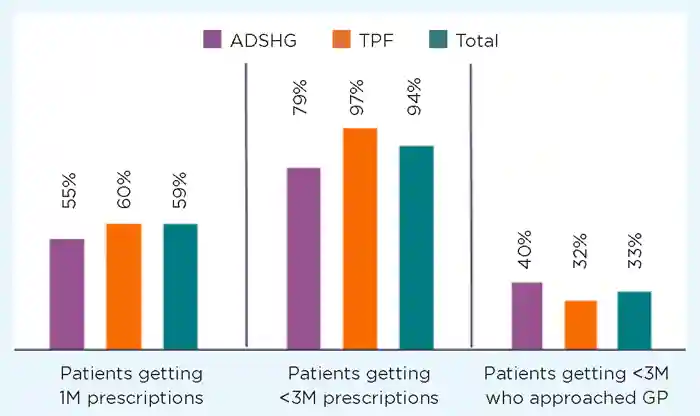
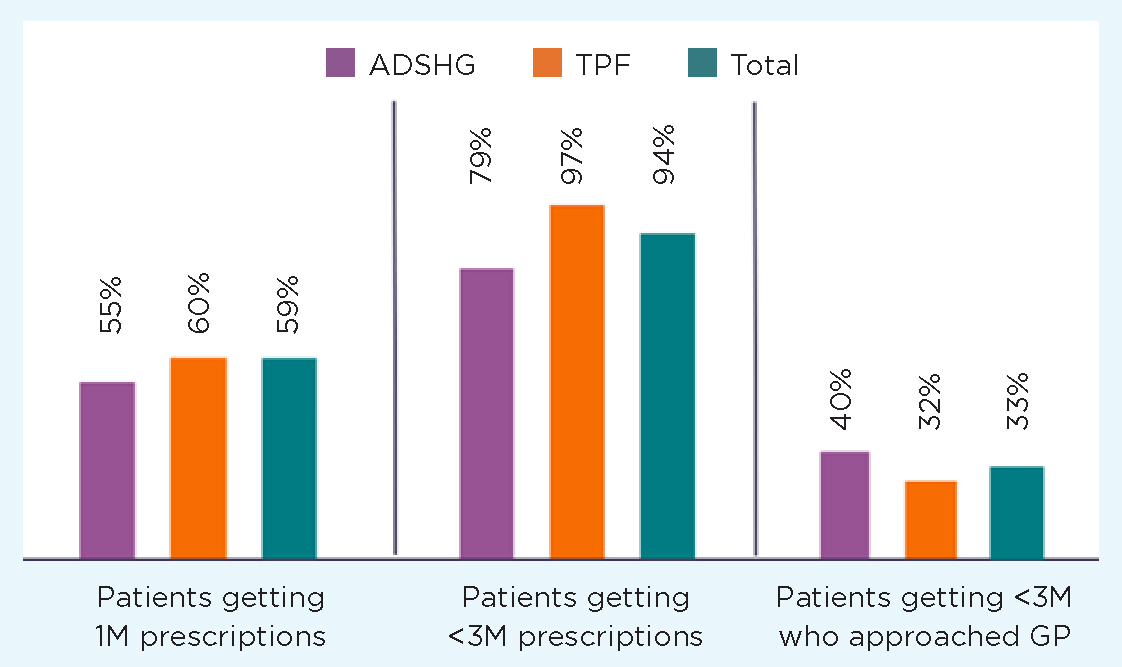
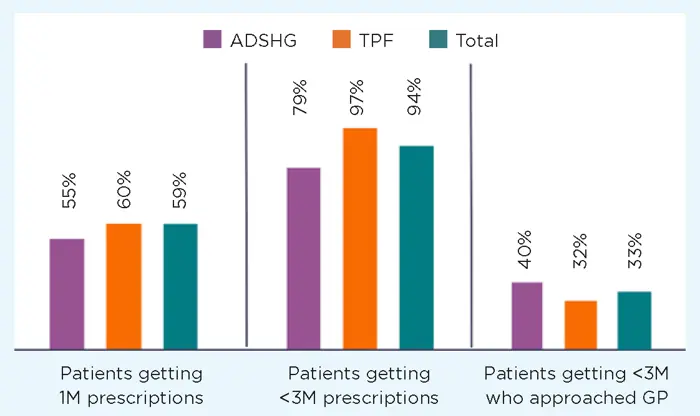
Results of survey of prescription lengths by the Addison’s Disease Self-Help Group (ADSHG) and The Pituitary Foundation (TPF).
Being able to confidently and optimally manage their medication not only helps patients’ health day-to-day, but is essential to prevent life-threatening emergency situations. This is particularly relevant to patients with chronic endocrine conditions, such as adrenal insufficiency or arginine vasopressin deficiency (AVP-D).
For these patients, having an adequate medication supply isn’t just helpful, it’s life-saving. Having extra to cover loss, damage and increased dosing (for sick day rules) is key to self-management.
For this reason, it’s important that prescriptions of essential hormone replacements (glucocorticoids, desmopressin, levothyroxine, oestrogen and testosterone) provide at least a three-month supply. Shorter prescriptions mean more frequent requests to GPs, difficulty accessing sufficient medication for increased dosing, more pharmacy trips and more anxiety around self-management and emergency situations.
ASSESSING THE CURRENT SITUATION
The Pituitary Foundation (TPF) and the Addison’s Disease Self-Help Group (ADSHG) recently collaborated to survey communities about prescription lengths. Of the 1724 people who responded, the vast majority received a supply for less than three months (97% TPF, 78.8% ADSHG), with more than half only receiving only a 28-day supply (60% TPF, 55% ADSHG). The results were presented at SfE BES 2026.1
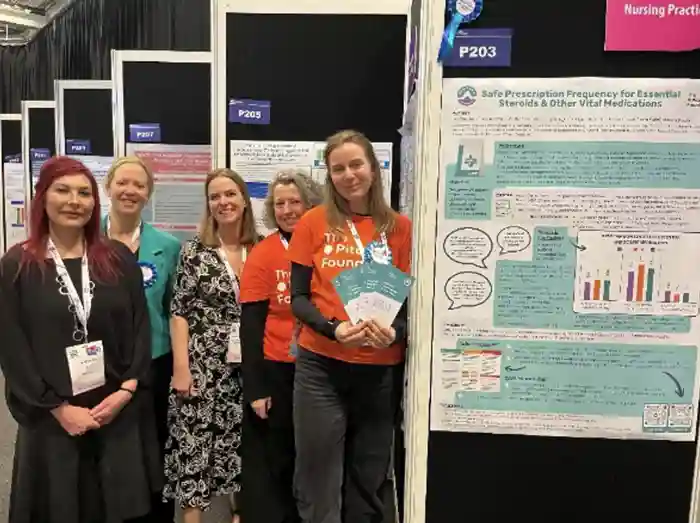
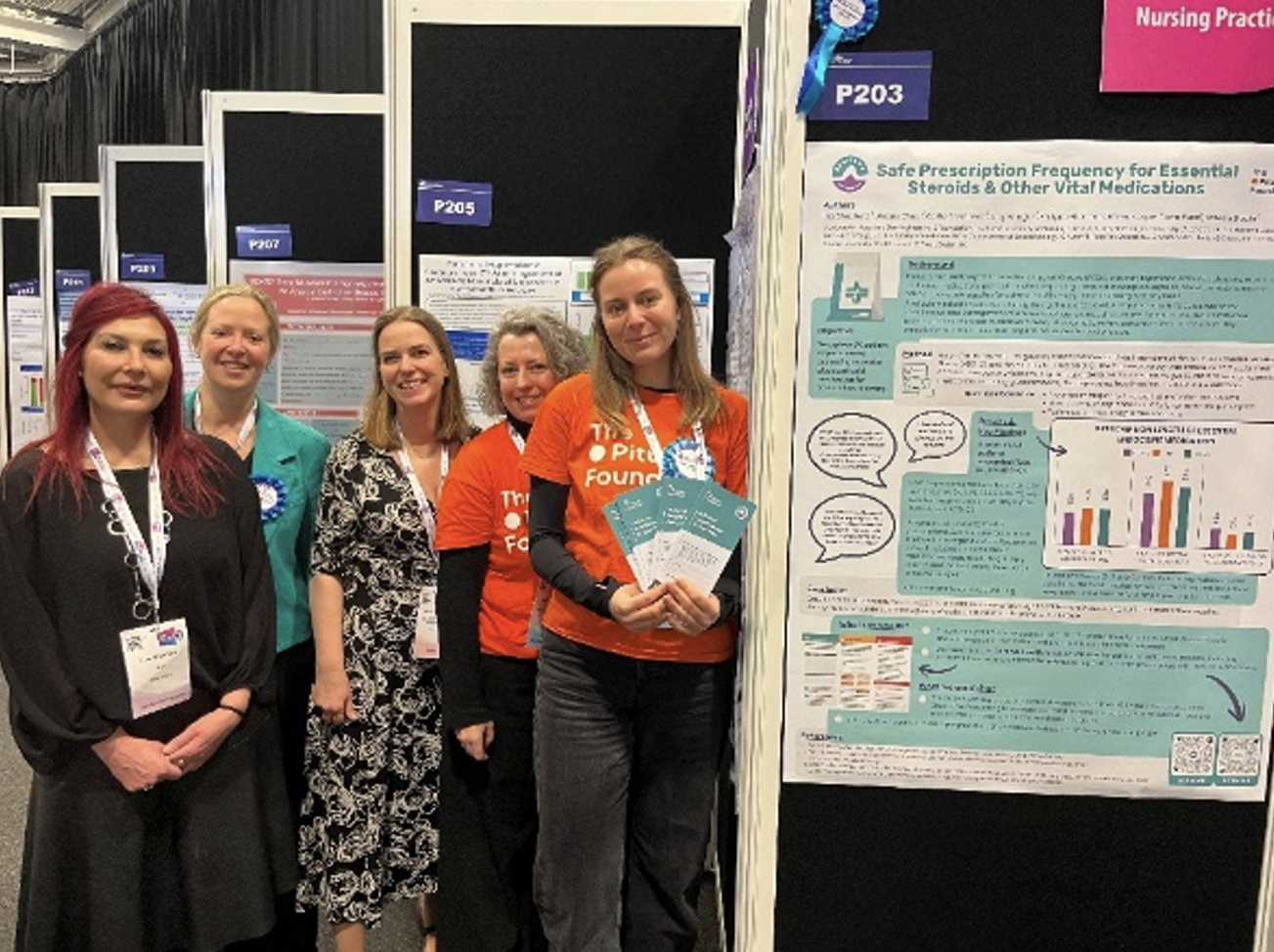
The Prescription Frequency Project Team presenting our poster at SfE BES 2026 (L–R) Lisa Shepherd, Cathy Thompson, Antonia Brooke, Emma Cooper and Amy Shingler.
Among those receiving shorter prescriptions, 33% had previously asked their GP for longer supplies but had been refused. Reasons included concerns about wastage, stockpiling, patient safety and supply chain issues, and local/NHS policy preventing it.
These data reflect not just inconsistent prescription practices, but also a real-life obstacle to patients’ ability to confidently and safely manage their condition.
ACTION YOU CAN TAKE
To address this situation, template letters have been created for patients to use to request longer prescriptions. These letters are endorsed by the Society for Endocrinology and the expert medical committees of The Pituitary Foundation and the ASDHG. There is also a new self-management and awareness resource: the Adrenal Insufficiency Action Plan.
You can access these resources and find out more about this research online:
The Pituitary Foundation
ADSHG
Please support your patients by:
• sharing these documents with your patients to help them ask for longer prescriptions.
• providing your patients with three-month prescriptions for essential hormones and prompting this on clinic letter outcomes.
AMY SHINGLER
Information and Communications Manager, The Pituitary Foundation
REFERENCES
1. Shepherd et al. 2026 Endocrine Abstracts https://www.doi.org/10.1530/endoabs.117.P203.